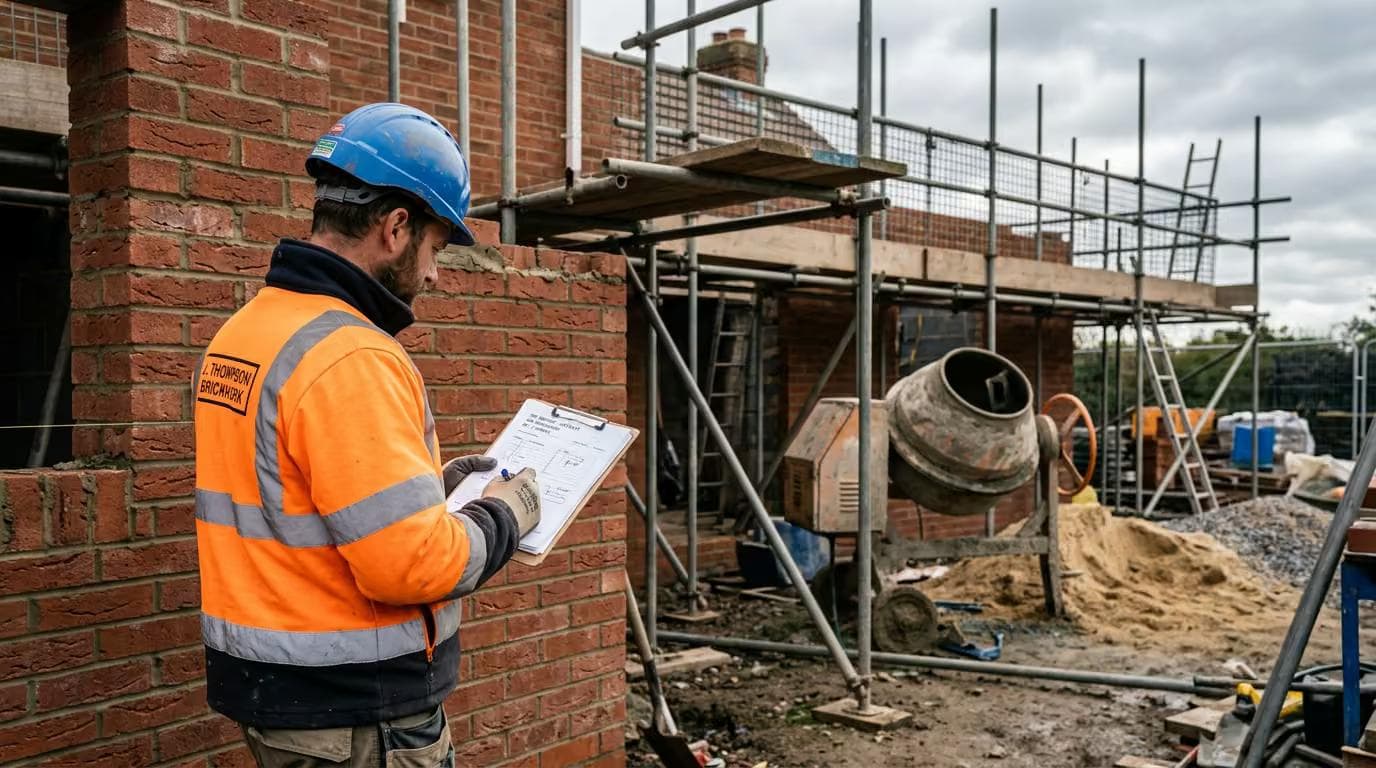
A subcontractor with gross payment status under the Construction Industry Scheme is paid in full, with no deduction taken, instead of losing 20% or 30% to the contractor at source [1]. To qualify, a sole trader must show net construction turnover of at least £30,000 in the 12 months before applying, and there is a £100,000 alternative test for larger partnerships and companies [4]. For a growing subcontractor, that difference decides whether tens of thousands of pounds sit in HMRC's account through the year or in the business's own.
Gross payment status is the most valuable position a CIS subcontractor can hold, and also the hardest to keep. HMRC grants it only after three separate tests are passed, and it reviews the status every year, withdrawing it where a subcontractor falls behind on its own tax obligations [6].
This guide explains what gross payment status is, the three qualifying tests and their thresholds, how to apply, and the tolerance rules that determine whether a subcontractor keeps the status at its annual review. It is written for construction subcontractors and the accountants who manage their CIS position.
Key takeaways
- Gross payment status means a subcontractor is paid in full, with a 0% CIS deduction, and settles all tax through its normal annual return instead.
- Three tests must be passed: a business test, a turnover test and a compliance test.
- The turnover threshold is £30,000 of net construction turnover per person, with a £100,000 alternative test for partnerships and companies.
- From 6 April 2024, compliance with VAT obligations was added to the compliance test.
- HMRC reviews gross status annually, and a subcontractor whose status is cancelled must wait 12 months before reapplying.
What gross payment status is
Under standard CIS, a contractor deducts money from a subcontractor's payment and sends it to HMRC as an advance towards that subcontractor's tax [13]. Gross payment status removes the deduction entirely: the contractor pays the full invoice, and the subcontractor becomes responsible for paying all of its tax and National Insurance at the normal annual points [1].
How it compares to the other CIS rates
There are three possible outcomes when a contractor pays a subcontractor, and gross status is the one that leaves the most cash in the subcontractor's hands during the year. The table below sets out all three [3].
| Status | Deduction at source | When it applies |
|---|---|---|
| Gross payment status | 0% | Subcontractor has passed the three qualifying tests |
| Registered, paid under deduction | 20% | Standard rate for a verified, registered subcontractor |
| Unregistered or unmatched | 30% | Subcontractor is not registered or cannot be matched |
The tax owed is ultimately the same under all three; gross status simply changes when it is paid [1]. A subcontractor moving from the 20% rate to gross status does not pay less tax overall, but it keeps hold of the cash until its self-assessment or corporation tax deadline [3].
The cash flow benefit
For a subcontractor turning over several hundred thousand pounds of labour, a 20% deduction can tie up a very large sum with HMRC across a tax year, recovered only after the year ends [1]. Gross status frees that working capital, which is why established subcontractors treat it as a priority once they qualify [3].
Consider a subcontractor invoicing £250,000 of labour across a tax year. Under the standard 20% rate, £50,000 is withheld at source and held by HMRC until the subcontractor's return is filed and any refund processed after the year end [1]. With gross status, that £50,000 stays in the business throughout the year, available for wages, materials and plant [3]. The trade-off is discipline: the subcontractor must budget for a single large tax bill rather than having tax collected in instalments, and firms that run a low-turnover payroll for sole traders operation sometimes prefer the enforced saving of deduction at source.
The three qualifying tests
HMRC confirms gross payment status only after a subcontractor passes a business test, a turnover test and a compliance test [5]. All three must be met; failing any one results in refusal [3].
The business test
The business test checks that the applicant genuinely runs a construction business in the UK. HMRC looks for a business that carries out construction work, or supplies labour for it, within the UK and that runs largely through a bank account [5]. The purpose is to confirm the applicant is a real trading business rather than a shell, so the evidence expected is ordinary business records: invoices, bank statements and construction contracts [1].
Applicants who cannot demonstrate a UK construction business, or whose affairs are not run through a bank account in the usual way, fail this test and are refused [3].
The turnover test
The turnover test is based on net construction turnover, meaning gross income from construction work excluding VAT and the cost of materials [1]. The threshold varies by business type, and there is an alternative £100,000 test for partnerships and companies that suits larger operations with several partners or directors [4].
| Business type | Standard threshold | Alternative test |
|---|---|---|
| Sole trader / individual | £30,000 net construction turnover | Not applicable |
| Partnership | £30,000 per partner | £100,000 for the whole partnership |
| Company | £30,000 per director (and per beneficial shareholder if a close company) | £100,000 for the whole company |
The figures are measured over the 12 months before the date of application, and the applicant must be able to evidence how they were reached [1]. Because turnover is measured net of materials, a subcontractor whose invoices are materials-heavy needs proportionately more gross income to clear the threshold [4].
For example, a sole trader who invoices £45,000 in a year but whose invoices include £18,000 of genuine materials has net construction turnover of only £27,000, which falls short of the £30,000 threshold [4]. The same trader with £10,000 of materials would show net turnover of £35,000 and clear the test comfortably [1]. This is why labour-only subcontractors, whose invoices carry little in the way of materials, tend to reach the threshold at a lower level of gross income.
The compliance test
The compliance test checks that the applicant has met its tax obligations on time. It covers CIS, PAYE, income tax self assessment and corporation tax self assessment, and from 6 April 2024 it also covers VAT obligations [7]. Adding VAT to the test was a deliberate tightening: the reform gave HMRC an additional ground to refuse or withdraw gross status where a subcontractor falls behind on VAT [7].
The test is applied against the 12 months before the application, and returns and payments must have been made within the time allowed by law [9]. A limited number of minor lapses are permitted under the tolerance rules described below, but a poor compliance record is the most common reason an otherwise successful applicant is refused [8].
How to apply
A subcontractor applies for gross payment status by completing an online or postal form, which also registers the business for CIS if it has not already registered [1]. The form depends on the business structure: a limited company uses form CIS305, a partnership uses form CIS304, and an individual uses the individual registration route [10].
The application asks for the gross amount of construction income and the cost of materials, both excluding VAT, so that HMRC can work out net turnover [11]. Accuracy matters here: HMRC will not grant gross status on false information, and providing it can lead to a penalty [11]. Accountants processing several construction clients often handle these applications alongside CIS returns from a single multi-client payroll dashboard, which keeps each client's turnover and compliance evidence in one place.
Keeping gross payment status
Passing the tests once is not enough. HMRC subjects every gross payment status holder to an annual compliance review, sometimes called the scheduled or ongoing review, to confirm the subcontractor is still meeting its obligations [6]. A subcontractor must stay on time with its tax returns and payments to retain the status [6].
The compliance tolerance
HMRC does not withdraw gross status for every minor slip. A tolerance allows a small number of late returns or payments, set out below, provided nothing falls outside the limits [8].
| Type of lapse | What HMRC can disregard |
|---|---|
| Late CIS300 monthly returns | Up to three, each no more than 28 days late |
| Late VAT returns | Up to three, each no more than 28 days late |
| Late payments of £100 or more (CIS, PAYE or VAT) | Up to three, each no more than 14 days late |
Beyond those limits the tolerance is exhausted. Four or more late returns, any submission more than 28 days late, or any payment of £100 or more made more than 14 days late will normally cause the status to be refused or withdrawn [8]. A separate tolerance of 28 days applies to the most recent self-assessment or corporation tax return, and 38 days to the two most recent CIS300 returns, when the qualifying test is first applied [9].
Cancellation and reapplying
If HMRC cancels a subcontractor's gross payment status, the subcontractor drops back to deduction at source and must wait a full year from the date of cancellation before it can reapply [6]. HMRC can also withdraw the status where it has reasonable grounds to suspect that incorrect returns or information have been provided for corporation tax or other taxes [7]. Because a year without gross status ties up cash for the whole period, protecting the status through consistent compliance is far cheaper than regaining it [8].
What gross status means for the contractor
Gross payment status changes the contractor's side of the transaction as well as the subcontractor's. When a contractor verifies a subcontractor and HMRC returns a gross result, the contractor pays the full invoice with no deduction and does not report a deduction for that subcontractor on its monthly CIS300 return [13]. The contractor still verifies the subcontractor and still includes gross-status payments in its records, because HMRC uses that information to police the status at the annual review [5].
A contractor should never assume a subcontractor holds gross status without verifying it, because paying gross to a subcontractor who is not entitled leaves the contractor liable for the deduction that should have been taken [3]. Verification through HMRC is the only reliable confirmation, and it must be repeated when a subcontractor's status could have changed [5].
Gross status does not remove the tax
A frequent misunderstanding is that gross payment status reduces a subcontractor's tax. It does not. The subcontractor still owes the same income tax, National Insurance or corporation tax; it simply pays it later, through self assessment or its company tax return, rather than having it deducted along the way [1]. This is why the compliance test is so central: HMRC grants the cash-flow advantage only to subcontractors it trusts to pay the full bill on time at the year end [5].
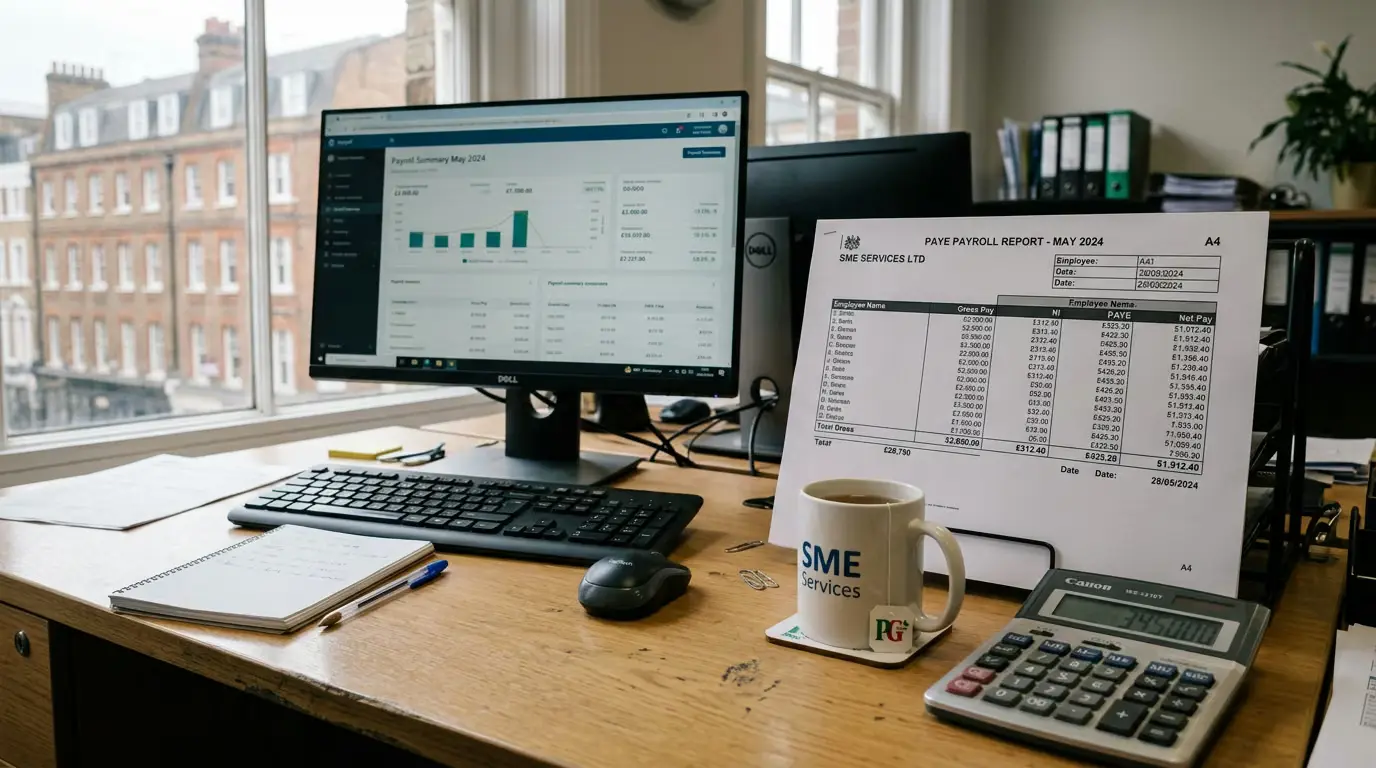
For a subcontractor that also employs staff, this means running accurate PAYE alongside its own gross-status obligations, because a PAYE default counts against the compliance test [7]. Keeping employer filings clean is part of keeping gross status, and many construction firms rely on HMRC-recognised payroll software for SMEs to file PAYE on time and avoid the lapses that jeopardise the review.
How software helps protect the status
Because gross payment status hangs on an unbroken compliance record across several taxes, the practical risk is not the initial application but the drift of a missed return months later [9]. CIS300 returns, PAYE submissions and VAT returns all feed the same compliance picture, and a single overlooked deadline can push a subcontractor past the tolerance [8].
Software that treats CIS and PAYE as a single, HMRC-recognised workflow keeps those deadlines aligned and files returns automatically, which is the most reliable way to stay inside the tolerance. For platforms and bureaux building construction tooling around this, Moonworkers exposes the same logic through its HMRC-recognised payroll API, and the interaction between gross status and deduction at source is covered further in the guide to what CIS tax is.
Conclusion
Gross payment status is a cash-flow instrument, not a tax saving. It rewards subcontractors with a genuine UK construction business, sufficient net turnover and a clean tax record by letting them hold their own money until the year end, rather than lending it to HMRC through the year. The three tests set the bar for entry, and the annual review with its tolerance rules sets the bar for staying in.
The tightening of the compliance test to include VAT from 6 April 2024 signals the direction of travel: HMRC is linking gross status ever more closely to a subcontractor's whole tax behaviour, not just its CIS record. Subcontractors who want the status, and want to keep it, will increasingly need every tax stream filed on time, which makes disciplined, joined-up payroll and reporting the foundation of the whole arrangement.
Frequently asked questions
Does gross payment status mean I pay less tax?
No. Gross payment status changes when tax is paid, not how much. A subcontractor with gross status receives payments in full and then settles all of its income tax, National Insurance or corporation tax through its normal annual return. The total owed is the same as it would be under deduction at source; the benefit is holding the cash for longer during the year.
What turnover do I need for CIS gross payment status?
A sole trader needs net construction turnover of at least £30,000 in the 12 months before applying, measured excluding VAT and the cost of materials. A partnership needs £30,000 per partner and a company needs £30,000 per director, but both can instead use an alternative test of £100,000 for the whole business. Applicants must be able to evidence how the turnover figure was reached.
Can HMRC take away my gross payment status?
Yes. HMRC reviews gross payment status every year and can cancel it if the subcontractor falls behind on its CIS, PAYE, self-assessment, corporation tax or VAT obligations beyond the permitted tolerance. It can also withdraw the status where it suspects incorrect returns or information. After a cancellation, the subcontractor must wait a full year before reapplying.
How many late payments can I have and keep gross status?
The compliance tolerance allows up to three late CIS300 returns and up to three late VAT returns, each no more than 28 days late, plus up to three late payments of £100 or more, each no more than 14 days late. Four or more late returns, anything more than 28 days late, or a payment of £100 or more made more than 14 days late will normally cause the status to be lost.